Silicone Rubber Sheet: Types, Properties, & Common Applications
- Usama Shareef · CTO & QA Specialist

- 14 Oct 2026
- 4 Minutes
Ever opened a machine and found a cracked, hardened gasket? We all know that it's frustrating. It also costs time and money.
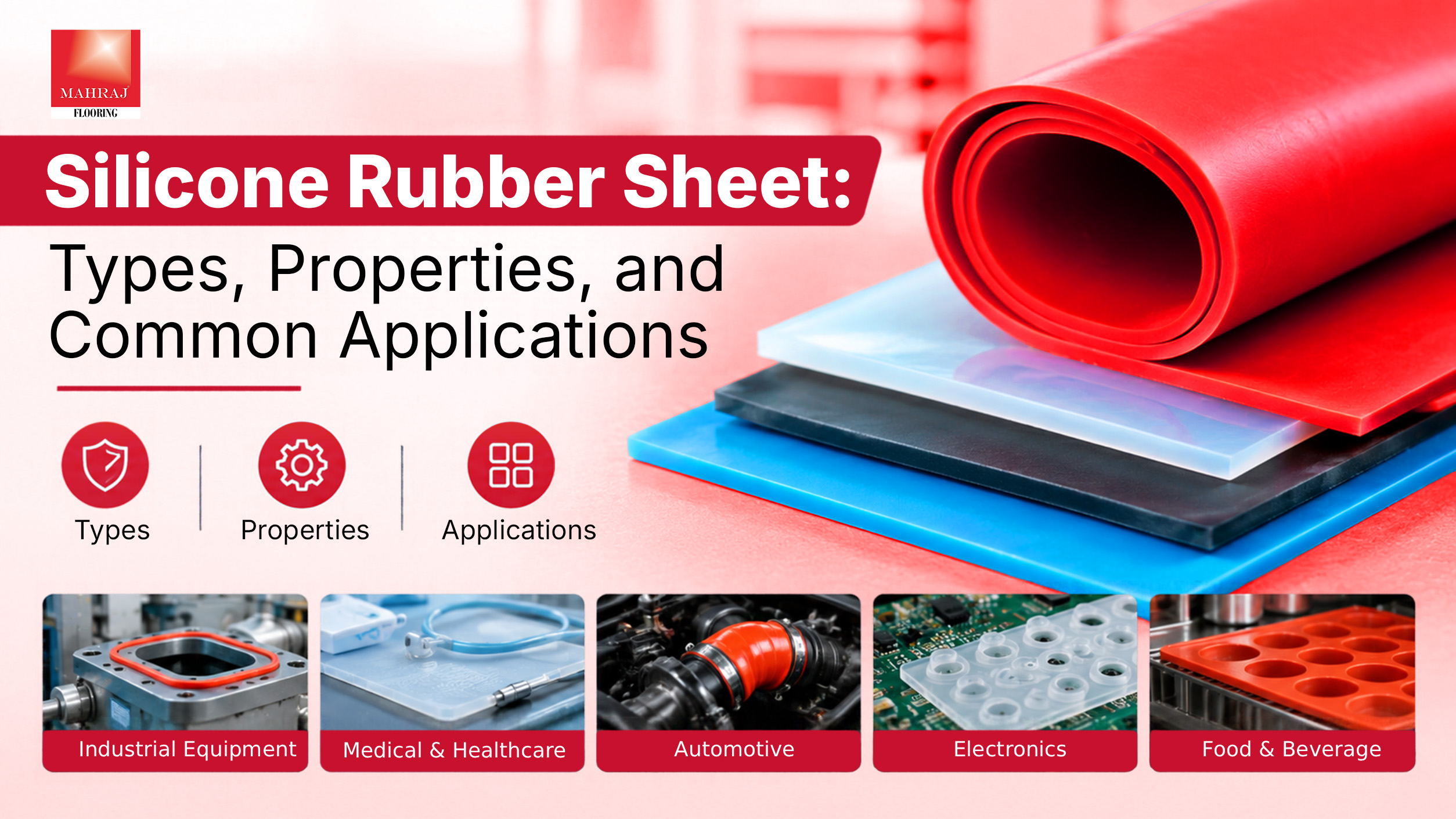
Ever opened a machine and found a cracked, hardened gasket? We all know that it's frustrating. It also costs time and money.
A silicone rubber sheet solves that problem. It stays soft in the cold. It stays strong in the heat. And it keeps its shape long after ordinary rubber gives up.
This guide keeps things simple. The type, key properties, common applications and selection of well types will be explained here.
- Silicone sheets handle both extreme heat and cold. Many grades are rated from about -60°C to 230°C or more.
- Options include solid, sponge, reinforced, food grade, medical, and conductive sheets
- Match hardness and thickness to your needs.
- Check certifications for food and medical use
- Store in a clean, dry location.
What is a Silicone Rubber Sheet?
The silicone rubber sheet is a flat piece made from silicone rubber available in standard thicknesses. You can chop it into the proper shape and repeat this process. It can be used for the production of gaskets, pads, seals or covers.
Silicone isn't like natural rubber. It has silicon and oxygen as its structure. As a result, it thrives in hot weather, bright sunlight and various weather conditions.
Sheets come in rolls and flat cuts. Red, white and translucent are common colours.
Types of Silicone Rubber Sheets
Here are the different types of silicone rubber sheets:
1. Solid Silicone Rubber Sheets
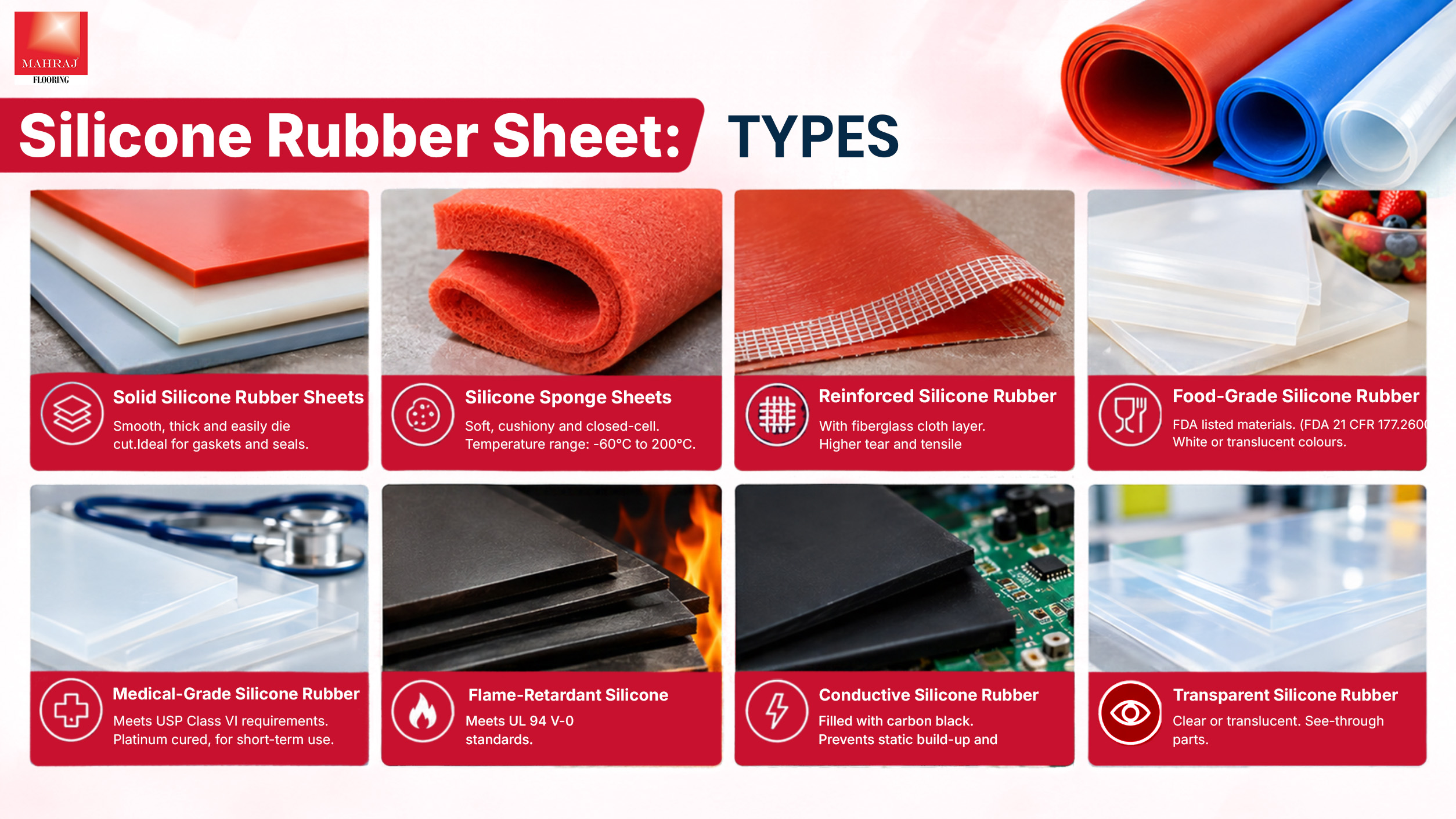
The all-rounder. Smooth, thick and easily die cut. Most solid sheets are in the 40–70 Shore A range, which is suitable for gaskets and seals. Silicone rubber sheet manufacturers offer different hardness levels to suit various applications.
2. Silicone Sponge Sheets
Soft and cushiony. It has a closed-cell structure, which means it doesn't allow air or water to penetrate it. Only one sponge sheet stands out, with a temperature range of -60°C to 200°C and a hardness of just 13 Shore A.
3. Reinforced Silicone Rubber Sheets
A layer of fiberglass cloth is inside the rubber. Enhances tear strength and/or tensile strength. Apply it in flange gaskets where there is a high squeeze force.
4. Food-Grade Silicone Rubber Sheets
Made with FDA listed materials. Many follow FDA 21 CFR 177.2600. White or translucent colours should be used, as dirt will be easily recognized.
5. Medical-Grade Silicone Rubber Sheets
Some grades meet USP Class VI requirements and are platinum cured. This grade is recommended for devices that are used for less than 29 days in the body. Always confirm the paperwork
6. Flame-Retardant Silicone Rubber Sheets
They meet UL 94 V-0 flammability standards . They resist flames and give off very little smoke.
7. Conductive Silicone Rubber Sheets
Filled with carbon black. They prevent static from building up and get rid of it in electronics.
8. Transparent Silicone Rubber Sheets
A transparent silicone rubber sheet is clear or translucent. Handy when you want to see through a part. These translucent sponges can handle up to 230°C.
Key Properties of Silicone Rubber Sheets
Here are several properties that make silicone rubber sheets suitable for demanding industrial uses.
Temperature Resistance
There are a lot of sheets that can be frozen, starting from about -60°C up to 200°C. Some solid grades go to 230°C or even higher. So check your grade specific datasheet.
Flexibility and Elasticity
These clear silicone rubber sheets combine flexibility, shape recovery, and reliable softness in cold weather.
Electrical Insulation
It blocks electric current well. Because of this, it is considered a perfect material for electrical apparatus.
Chemical and Weather Resistance
Resistant to most mild chemicals and harsh weather conditions, with minimal impact from water exposure. But be careful. Strong acids or bases, oils and fuels can cause damage to normal grades.
UV and Ozone Resistance
Many rubbers become weakened when exposed to sunlight and ozone. Silicone shrugs them off. So it's quite suitable for use outside.
Hardness (Shore A)
Shore A is a measure of the softness or firmness of a sheet. Lower is softer. Higher is firmer. Solid sheets commonly range from about 40 to 70 Shore A.
- 40A: Soft, good for tight sealing
- 60A: Balanced, good for general use
- 70A: Firm, good for support and wear
Compression Set Resistance
If the seal isn’t tight enough, press and squeeze it to flatten it for at least 2 minutes. Good silicone springs back. That keeps seals tight for longer.
Water and Moisture Resistance
Water does not soak in. Sheets stay stable in wet and humid places.
Common Applications of Silicone Rubber Sheets
From industrial equipment to food processing, silicone rubber sheets serve many practical purposes. Like:
Industrial Gaskets and Seals
Hot pipes, covers and flanges need seals that don't give up. Silicone sheets are cut into gaskets that last.
Food and Beverage Processing
Used as conveyor pads, seals and liners. Food grade sheets are easy to clean and won't add flavour or odor.
Medical and Healthcare
It is applicable for device parts, pads, and cleanroom parts. This silicone does not cause irritation. Instead, it keeps things clean and helps the parts work as expected.
Electrical and Electronics
All of the insulating pads, spacers and shielding are made of silicone. It helps protect the components from heat. It also helps protect them from shock.
Automotive
Put gaskets, anti vibration pads, and protective covers in the engine compartment. This way, heat and cold swings will not cause issues.
Aerospace
Planes deal with very high heat and shifting pressure. These silicone seals and cushions hold up well in these situations.
Construction and Ventilation Systems
You can use silicone for ductwork, expansion joints, and weather seals. It still performs in tough job sites. A silicone rubber sheet for solar panel systems can provide sealing or cushioning.
Heat Sealing and Vacuum Press Use
When you use heat or a vacuum press, a silicone sheet helps spread the force evenly. It also helps when the process repeats many times. Pick a silicone rubber sheet for heat press based on the needed temperature and pressure.
How to Choose the Right Silicone Rubber Sheet?
Begin by stating the problem. Then match the sheet.
- Check the temperature. Know your highest and lowest heat.
- Know the contact. Food, skin, oil or chemicals? This decides the grade.
- Pick the hardness. Soft for sealing. Firm for support.
- Decide solid or sponge. Sponge for cushion. Solid for strength.
- Look for approvals. Typically confirms FDA, USP Class VI or UL 94 as specified.
- Request a data sheet. Just trust numbers, not guesses.
Always ask for a sample and test it before purchasing.
Silicone Rubber Sheet Thickness and Size Options
There are many silicone sheet thicknesses that are available. Thin ones are similar to pad membranes. Thick ones are similar to a cushion or a gasket.
Common sizes include:
| Types | Typical Thickness Examples | Common Sheet Sizes |
|---|---|---|
| Solid Silicone Sheet | 1/32–1/2 in (0.8–12.7 mm) | 12 × 12, 36 × 36, 36 × 48 in |
| Silicone Sponge Sheet | 1.5, 3, 6 mm | 1,000 × 600 mm |
Sizes and thickness change by supplier. Many can also cut to size or supply rolls.
Two Small Things Matter:
Tolerance
Thickness can vary by sheet. For example, 1/2 inch sheets may have ±0.050 inch tolerance, while 1/16 inch sheets may have ±0.011 inches.
Adhesive backing
Adhesive is applied on some sheets. This makes gasket work quicker.
Silicone Rubber Sheet Maintenance and Storage
Silicone is low maintenance. But a little care goes a long way.
Cleaning
- Use mild soap with warm water.
- Rinse well, then dry the area.
- Do not use sharp items. They can get stuck in the surface.
Inspect Often
- Check for cuts or tears.
- Also watch for spots that look flat or stiff.
- If seals are not working well, swap the gaskets.
Storage
- Store it flat.
- Or store rolled if possible.
- Never fold sharply.
- Choose a cool, dry spot.
- Keep out of direct sun and heat.
- Protect from tools and heavy items.
- Cover securely to block dust.
Handling
- Wear clean gloves when using medical/food sheets.
- When cutting, use clean, sharp cutting implements.
- Take care of it and it will last.
Conclusion
Silicone rubber sheets are among the useful materials around. It handles heat. It handles cold. It is resistant to weather, water and UV. And there's a grade for food, medicine, fire safety and electronics.
However, choosing the right sheet for your task is key. Begin with the surface, temperature, hardness and the standards required. Then refer to the data sheet. If you have any doubts, take a test sample.
When done correctly, your silicone sheet will operate quietly and efficiently for years. For reliable flooring and rubber solutions, you can trust Mahraj Flooring. They offer options for different commercial and industrial needs.
FAQs
Usama Shareef
CTO & QA Specialist
Need advice on your project?
Share your specification and our technical team will recommend a suitable flooring system for your traffic, budget, and maintenance requirements.
Request a Quote